


by Wang Kai
SANYA, Dec 18 (China Economic Net) - When Muhammad Waleej Arslan first took control of an agricultural drone in southern China, it was not the machinery that struck him most, but what it represented. For the Punjab-based agriculture officer, three months spent training among orchards, laboratories and vertical farms in China’s tropical south became a window into how technology and research might offer new answers to some of Pakistan’s most persistent farming challenges.
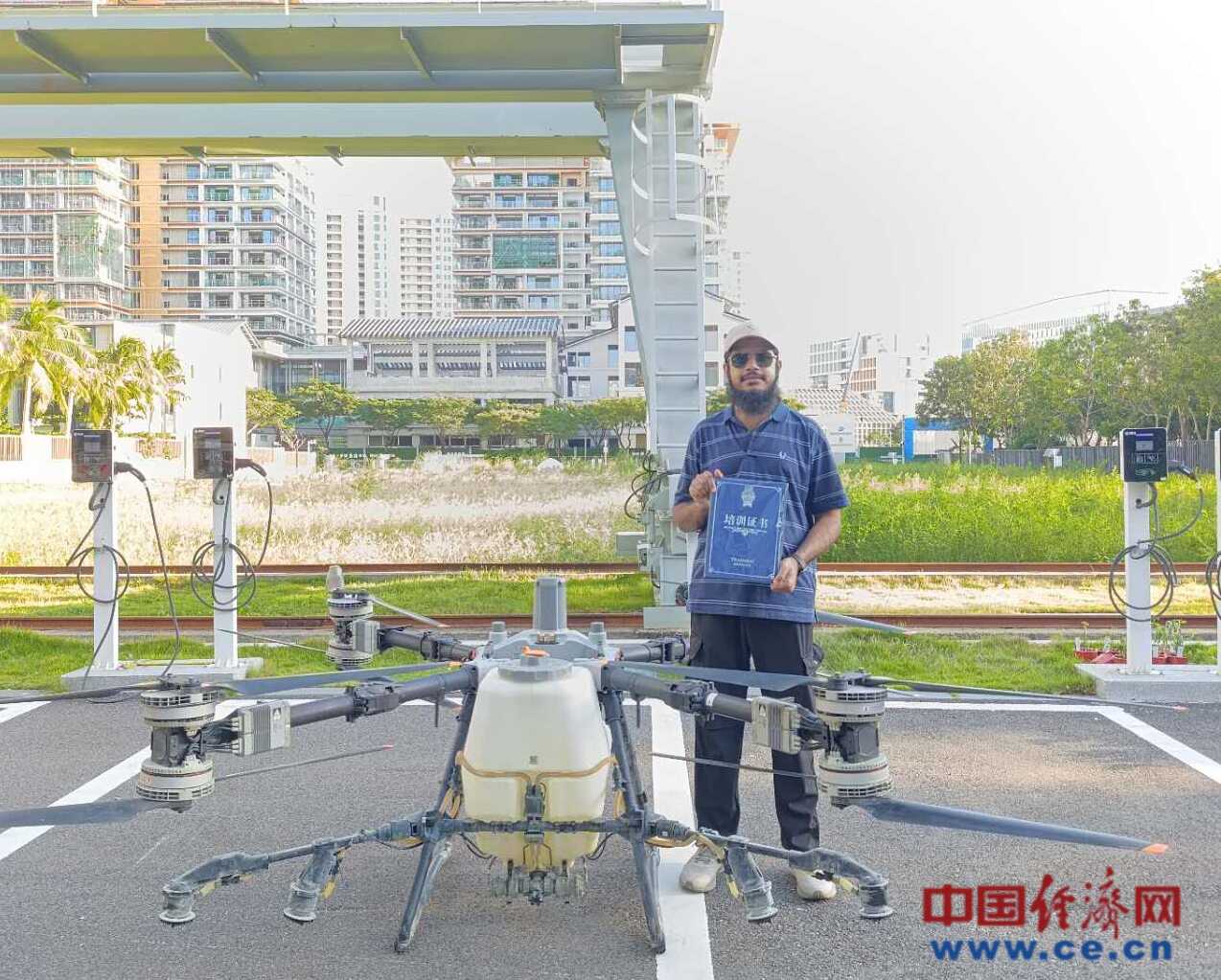
Muhammad Waleej Arslan completed drone training in Hainan, China under Pakistan’s Capacity Building of 1,000 Agricultural Graduates in China initiative [Photo provided by interviewee]
Arslan, an officer with the Punjab Extension Agriculture Department, recently completed a three-month training programme in Sanya, Hainan Province, home to China’s national seed breeding base, as part of Pakistan’s Capacity Building of 1,000 Agricultural Graduates in China initiative. The programme combined classroom instruction with extensive field visits, focusing on fruit and vegetable processing as well as modern farm mechanisation.
In an interview with China Economic Net, Arslan told reporter that the first half of the training concentrated on post-harvest processing of fruits and vegetables. Participants studied the processing of mangoes, black pepper, watermelon, jujube, root crops, and other agricultural products. Visits to mango orchards and mango processing facilities in Sanya provided insights into value addition, quality control, and export-oriented production. Arslan also visited soybean-processing factories producing tofu, soybean milk, and other products - an eye-opening experience given Pakistan’s limited industrial-scale soybean processing.
The second phase shifted toward modern agriculture and mechanization. From advanced tractors and agricultural drones to radar-based monitoring systems, the training introduced participants to technologies that are transforming Chinese farming. For Arslan, operating an agricultural drone for the first time was a particularly memorable experience, highlighting how precision tools can reduce labor costs while improving efficiency.
“Among the most striking concepts he encountered was vertical farming. Unlike traditional horizontal agriculture, vertical farming uses multi-story structures to grow crops with controlled inputs of water, fertilizer, and light. This method, already widely adopted in parts of China, relies heavily on automation, robotics, and precise nutrient management. For Pakistan - where soil infertility is becoming an increasing concern - vertical farming could offer an alternative path to higher yields and better-quality produce without expanding farmland,” Arslan said.
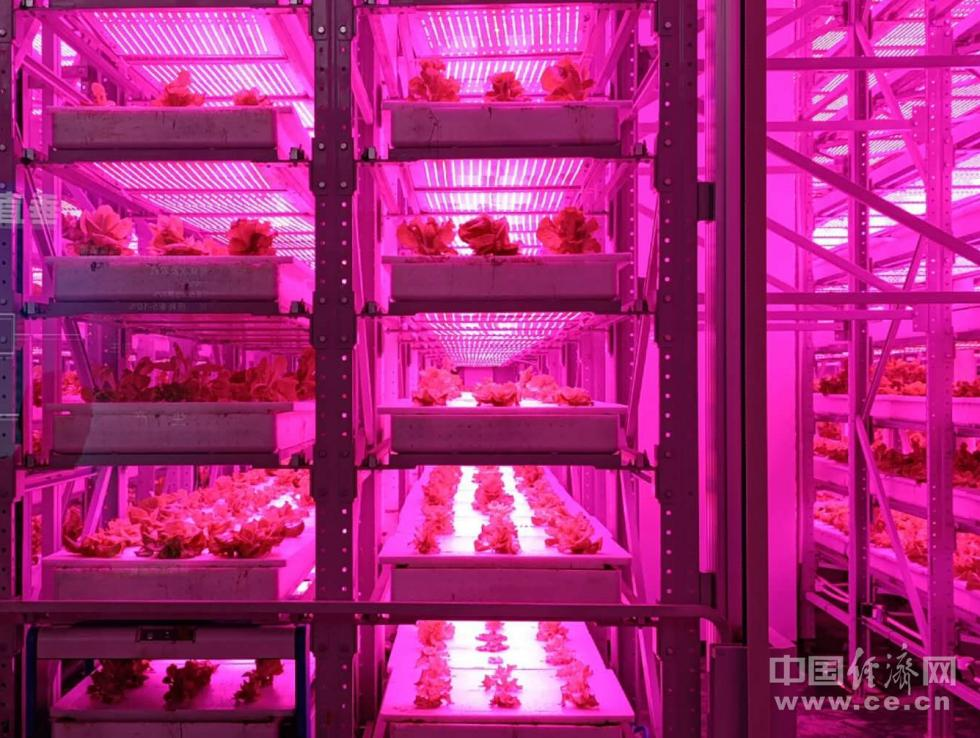
Vertical farming in China [Photo provided by interviewee]
“Artificial intelligence (AI) plays a central role in these systems,” Arslan observes. In China, AI-powered tractors and driverless machinery are increasingly common, while drones and sensors help determine exactly how much water or fertilizer crops need. Mobile applications can identify pests, plant diseases, and nutrient deficiencies simply by analyzing leaf images.
“Such technologies could significantly improve decision-making for Pakistani farmers if adapted to local conditions,” Arslan notes.
However, technology transfer alone is not enough. Arslan believes that joint China–Pakistan agricultural research laboratories should be established in Pakistan to address local challenges. “Pakistan needs research tailored to its own soils, climate, weather patterns, and market needs,” he argues. Without localized research, imported technologies risk being underutilized or misapplied.
As Pakistan faces mounting pressures from climate change, water scarcity and land degradation, the country’s agricultural community is increasingly looking to China for cooperation in joint projects and talent development. According to Dr. Abid Ali who currently works at Shenyang Normal University,recent policy initiatives in Punjab, Pakistan’s agricultural heartland, have opened up new possibilities. “Punjab has recent announced initiatives on shrimp farming. Although the province has no coastline, similar inland aquaculture systems operating successfully in parts of China could provide inspirations. “Shrimp farming in Punjab would have sounded unrealistic a few years ago,” he said. “But with the right technology and research support, it could become a viable new source of income for farmers.”
(Editor: wangsu )