


By Liao Yifan
For years, Rashid Akram and his family endured the harsh routines of summer in Lahore, where temperatures regularly climb above 45 degrees Celsius. Chronic power outages and rising electricity prices have long strained households and farmers across Pakistan, particularly during peak heat.
That began to change about 18 months ago, when Akram installed 36 rooftop solar photovoltaic modules from Chinese manufacturer Astronergy, following a recommendation from a friend.
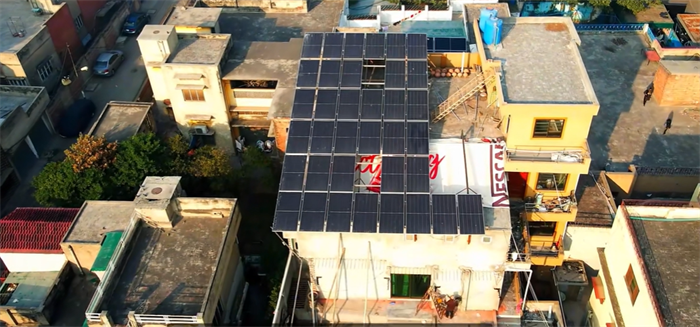
Solar panels installed at Rashid Akram's home. [Photo provided by Astronergy]
"The most noticeable difference is the electricity bill," Akram said. "Even on the hottest days, our air conditioners and refrigerators run without interruption."
The 21-kilowatt system generates about 28.5 megawatt-hours of electricity a year, significantly reducing household energy costs while cutting carbon emissions by an estimated 27.36 tonnes annually.
Such installations are becoming increasingly common across Pakistan. As economic growth and rising appliance ownership place added strain on an ageing power grid, rooftop solar—once considered a niche option—has increasingly become a practical solution for energy security.
The impact is also being felt in agriculture. In Okara district in Punjab province, solar-powered irrigation systems are replacing grid-dependent pumps that were often disrupted by power cuts and high tariffs.
A 30-kilowatt photovoltaic system supplied by Astronergy now provides stable electricity for irrigation, generating around 41 megawatt-hours per year and reducing carbon emissions by nearly 40 tonnes.
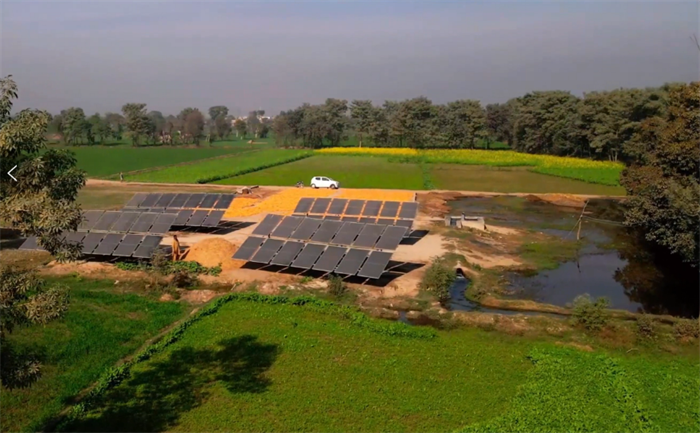
The Astronergy-powered agricultural water pump project at OKRA Field, Pakistan. [Photo provided by Astronergy]
"Electricity costs have dropped significantly, and irrigation is no longer delayed," said Rai Shaukat Ali, owner of Oakra Fields. "Solar-powered pumps have made crop planning much more predictable."
Nearby, a water supply pumping station equipped with a similar solar system is expected to produce 42.8 megawatt-hours annually, highlighting the growing role of solar power in maintaining essential rural infrastructure.
Pakistan's solar market has expanded rapidly in recent years. Trade data show that between 2022 and 2024, the country's annual imports of Chinese-made solar panels rose nearly fivefold, reaching 16 gigawatts. By the end of 2025, cumulative solar imports are expected to roughly match the installed generation capacity of Pakistan's national power system.
Analysts say the surge reflects both necessity and opportunity, as bilateral cooperation channels China's manufacturing scale and technology into Pakistan's urgent energy needs. The result is an expanding network of solar rooftops and fields, easing pressure on the grid while delivering cooler homes, more reliable harvests and a cleaner energy mix.
(Editor: fubo )