


By Meng Fanrong
SHENZHEN, Jan. 14, (China Economic Net) - For a PhD candidate from Pakistan's southwestern province of Balochistan, studying in China has opened a path to tackle pressing environmental challenges back home. Having arrived in China in 2016, Tufail Baloch from Barkhan District has found a second academic home at the prestigious Harbin Institute of Technology, Shenzhen.
“I have witnessed how policy-driven research and technological innovation address complex ecological issues,” the researcher shared, reflecting on his journey from observing water scarcity and land degradation in Balochistan to studying advanced environmental science in China. “China’s commitment to ecological civilization provides a powerful model for regions facing similar pressures.”
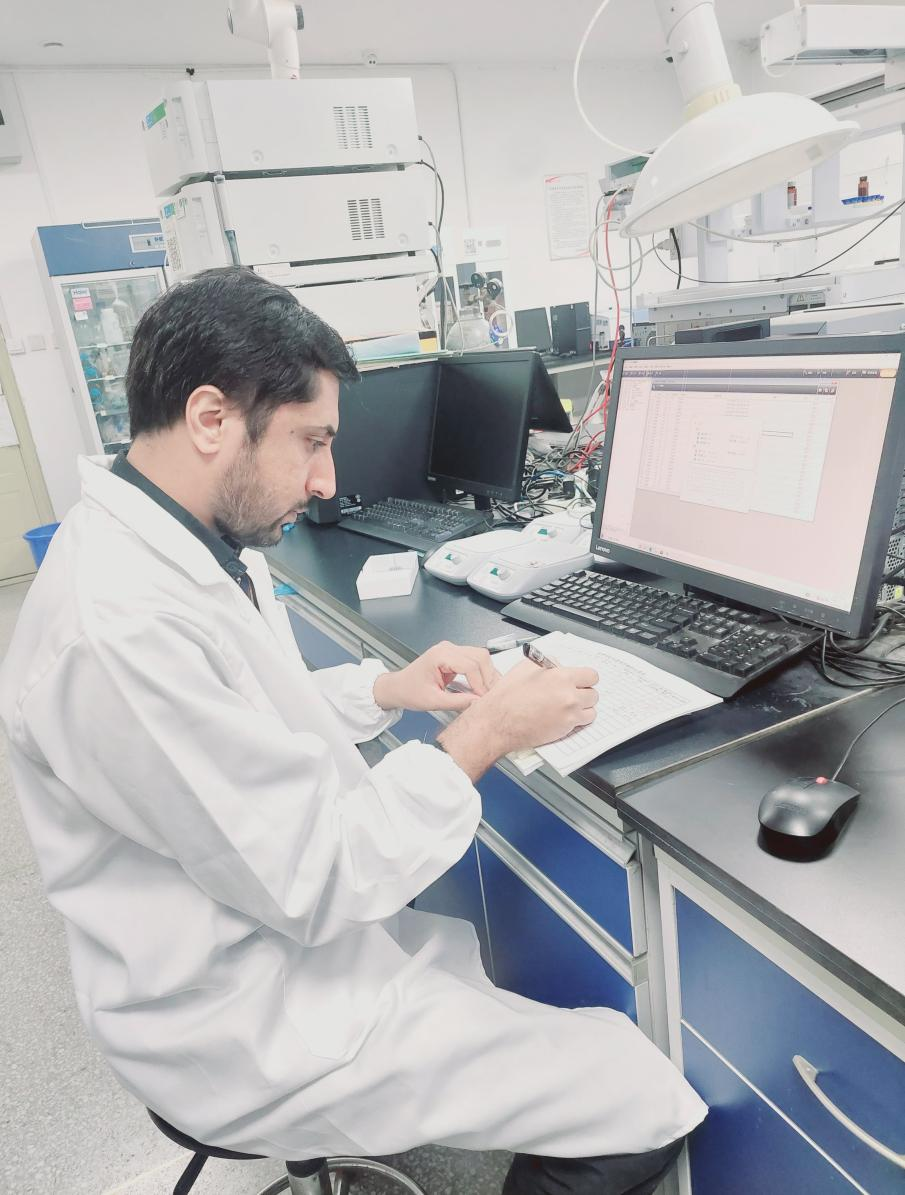
Tufail Baloch in a lab at university in China, photo provided to CEN
At the Harbin Institute of Technology, Shenzhen, internationally recognized for its strong research culture and advanced laboratories, he has immersed himself in data-driven environmental monitoring, integrated water resource management, and ecological restoration techniques. Shenzhen’s transformation into a green development pioneer offers him firsthand insight into sustainable urbanization and environmental governance.
“The knowledge and skills I am acquiring can be directly applied to Balochistan’s key environmental challenges, such as desertification control, sustainable water management, climate adaptation, and coastal ecosystem protection,” Tufail Baloch explained. “Techniques used in China such as data-based environmental monitoring, integrated water resource management and ecological restoration can be adapted to local conditions in Pakistan to support sustainable development and environmental policy making.”
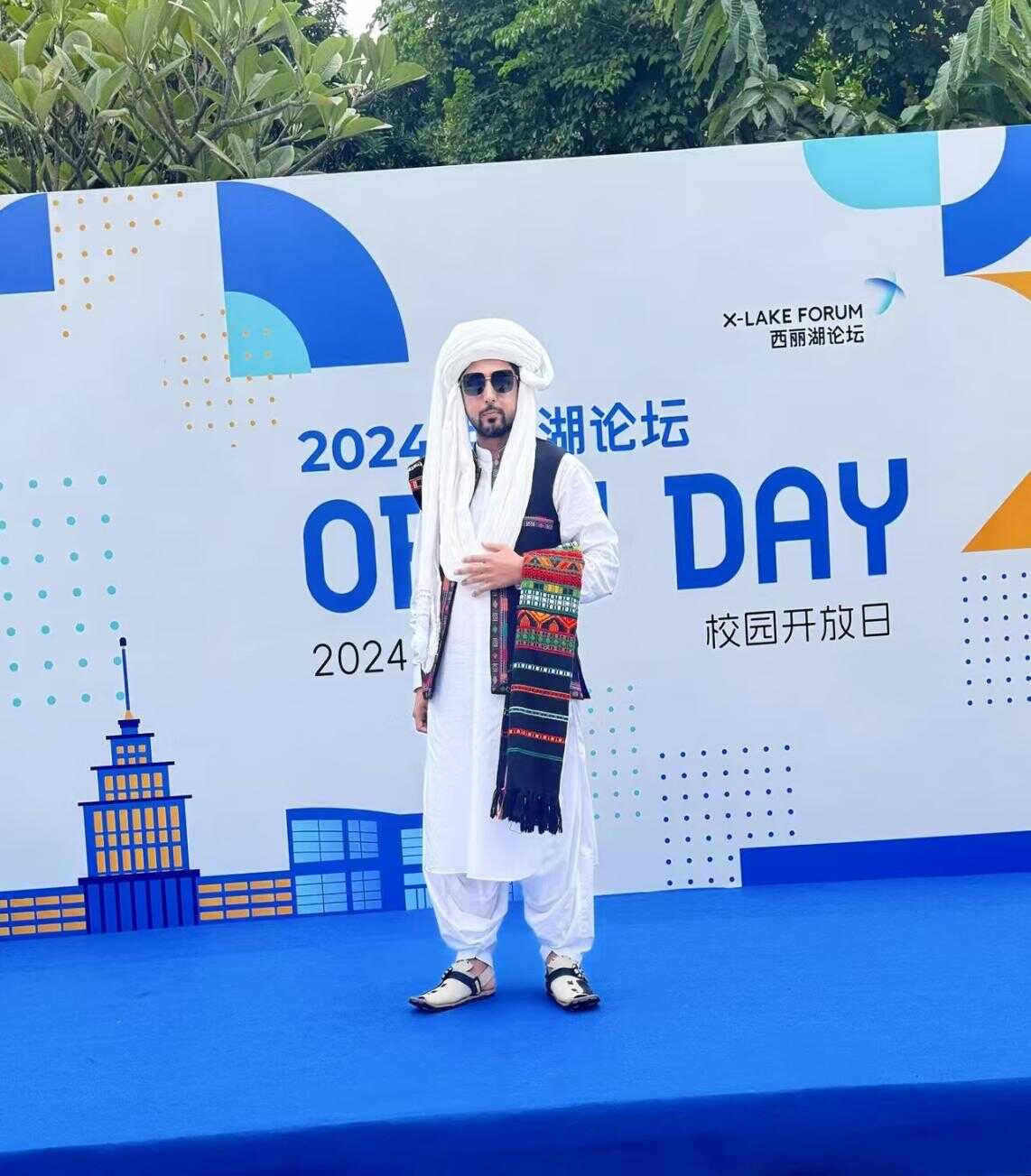
Tufail showcases traditional Baloch attire at a public cultural event in China., photo provided to CEN
Beyond academic pursuits, he has been active in promoting cultural exchanges, introducing his Chinese and international peers to traditional Baloch dress, cuisine and music - with particular emphasis during Baloch Culture Day, observed annually on March 2. “These interactions build mutual understanding while showcasing Pakistan’s rich cultural diversity,” he noted, describing how distinctive Baloch attire like the dastar or turban have sparked meaningful cross-cultural dialogues.
His journey reflects the strengthening of educational and environmental collaboration between China and Pakistan-a partnership that supports sustainable development and shared ecological well-being across Pakistan’s regions. Looking ahead, Tufail aims to foster China-Pakistan cooperation in environmental sustainability. “My goal is to contribute to ecological resilience in Pakistan, particularly in provinces like Balochistan where communities face climate and environmental pressures,” he stated.
(Editor: wangsu )