


By Meng Fanrong
BAODING, Apr 15, (China Economic Net) - Mahpara Baloch, a 22-year-old girl from the Panjgur district of Balochistan province, Pakistan, is now halfway through her six-year bachelor’s program in clinical medicine at Hebei University. With three years of study behind her and three more to go, she already dreams of returning home to heal children and serve her people.
Mahpara did not choose China by chance. She made her decision after careful observation. “China is very famous for its electric systems, subways, and advanced medical devices. That impressed me a lot,” she said. “It was my dream to study medicine abroad and see different countries. I looked at many options, but I believe China offers the best clinical medicine education.”
The language, she admits, was a concern at first. “Chinese is a little bit difficult, but not a big issue. People are very friendly when we learn the language. I have very supportive and helpful teachers, and I really appreciate their work.” She said the entire process of coming to China for her studies was smooth, which reassured her family. “My family is very satisfied because we know that China is a very safe country. Here, I travel alone in China and have a very nice time.”
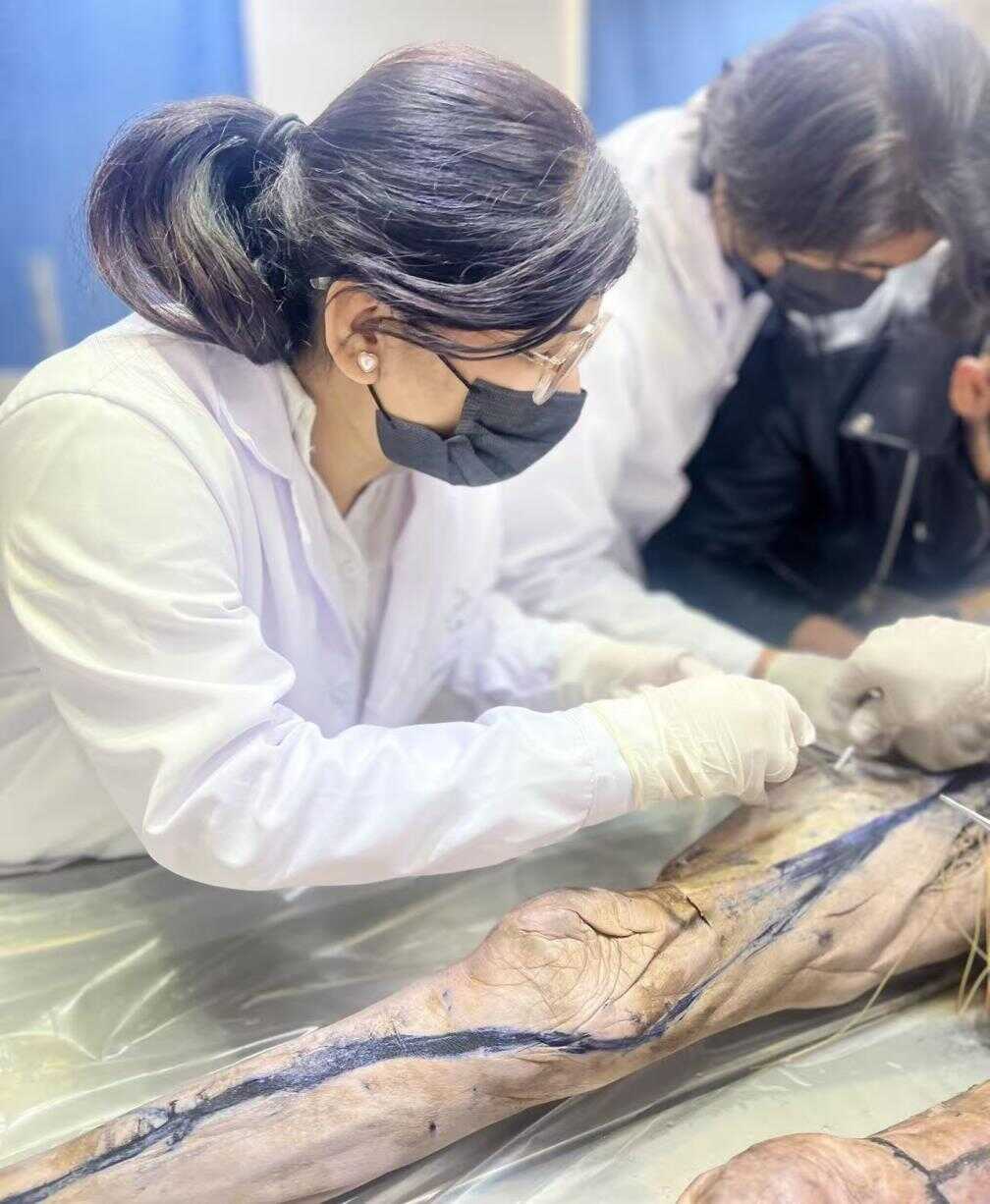
Mahpara Baloch studies clinical medicine in China. [Photo provided to CEN]
The quality of the education has exceeded her expectations. “Daily lectures include both theory and real clinical work with historical cases.” She visits university-affiliated hospitals to observe how doctors treat patients and to learn about China's healthcare system from the inside. “We have good access to teaching hospitals where I do rotations and learn patient checks. This hands-on training is very valuable, first on simple things and then on more complex procedures.”
She also plans to pursue a master’s degree in China, after which she intends to specialize in internal medicine and child health. “There are not very good healthcare facilities for children in my hometown. I want to use what I have learned in China to serve my people with compassion and skill.”
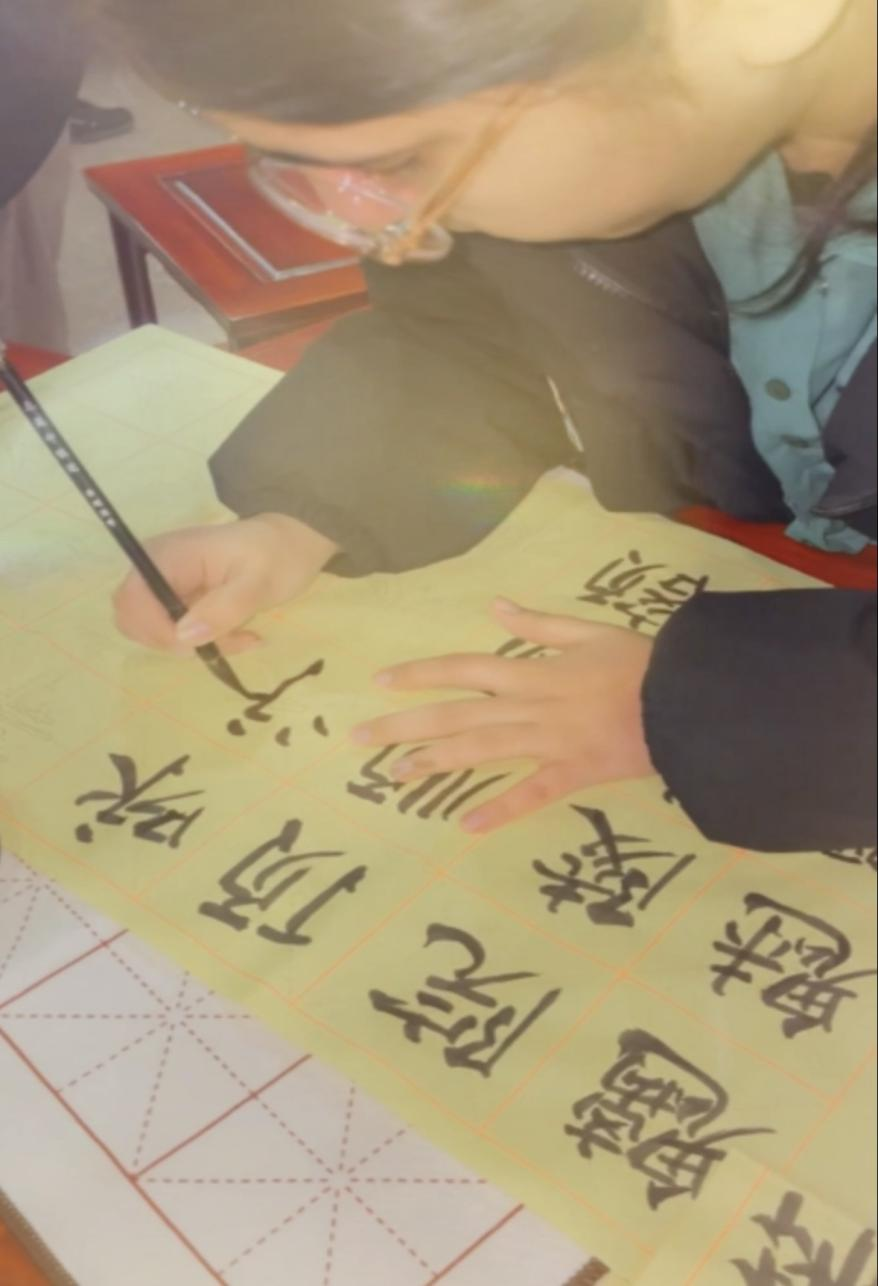
Mahpara Baloch practices Chinese calligraphy. [Photo provided to CEN]
Beyond medicine, Mahpara has developed a deep appreciation for Chinese culture. During visits to local museums, she observed that certain embroidery traditions of some ethnic groups closely resemble Pakistani handicrafts. She has since mastered the art of calligraphy. “My teacher taught me how to turn the brush and write correctly,” she said. She also takes great pleasure in the Mid-Autumn Festival and other traditional celebrations. “I love Chinese opera and will perform Beijing opera at this year’s cultural event.” At such events, Mahpara often wears her traditional Balochi dress. “My dress is so eye-catching that many students come to take group photos with me.”
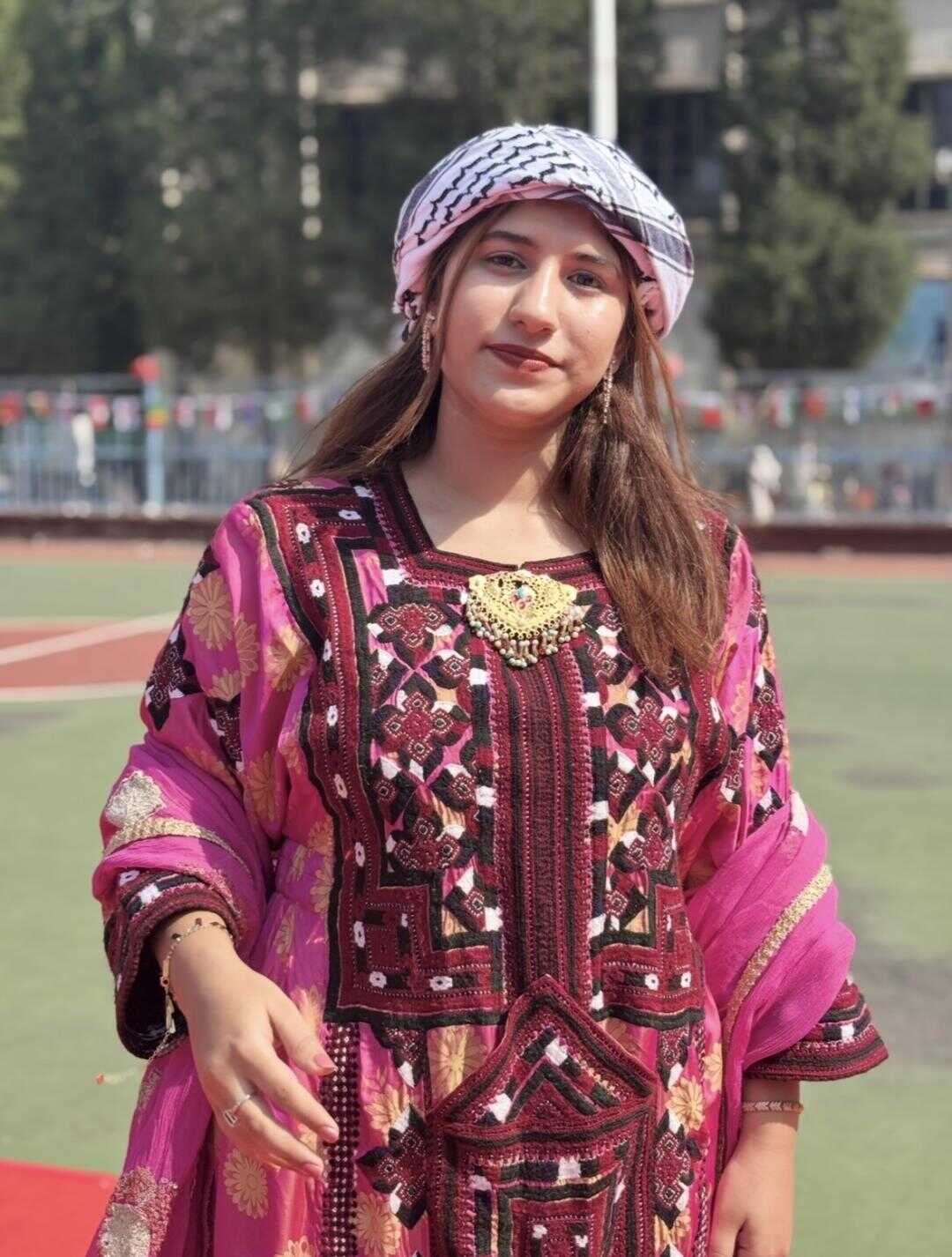
Mahpara Baloch wears traditional dress in China. [Photo provided to CEN]
For young women from Balochistan, Mahpara’s journey offers a powerful example. It shows how education, courage, and the growing ties between China and Pakistan can open doors to a brighter future, both for themselves and for the communities they will one day serve.
(Editor: wangsu )