


by Wang Xiaotong
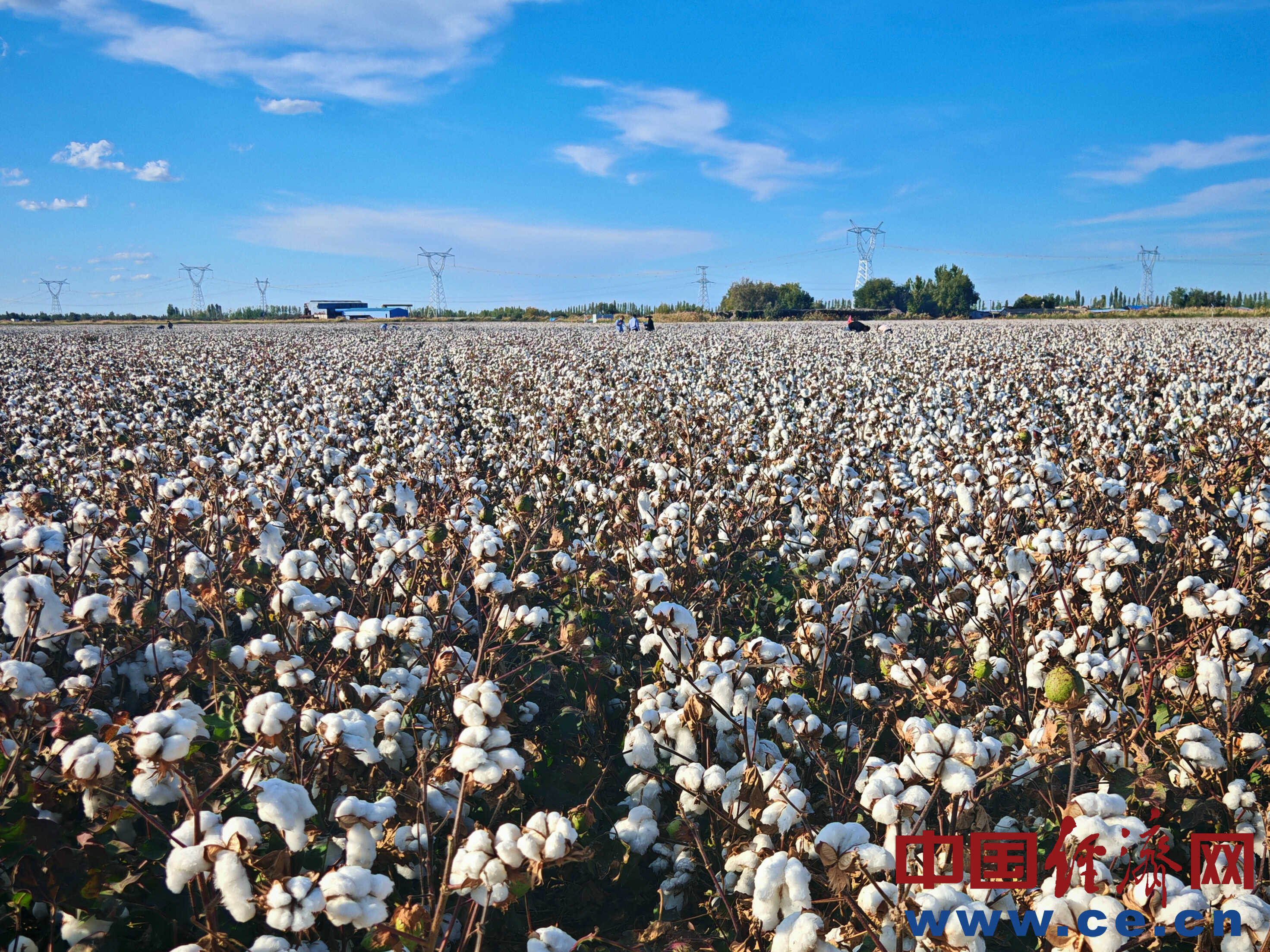
Cotton fields under drip irrigation in Xinjiang yield a bumper harvest. [Photo/Lin Ping]
"We organized an online-offline training workshop on water-saving irrigation technology in Islamabad last year. Impressively, the final tally shows that online-only participants alone exceeded 960," Xinjiang Tianye (Group) Co., Ltd. told China Economic Net at the recently concluded 2026 World Irrigation Technology Conference. This overwhelming turnout comes as no surprise, given that for years, China's smart and affordable irrigation technologies have been viewed as one of the most viable lifelines for Pakistan's agricultural sector.
Yet despite long-running trials, partnerships, and verified outcomes in Pakistan, most of these solutions remain confined to small demonstration plots, failing to reach farmers who need them most.
Proven Triumphs
China's modern water-saving irrigation technologies have taken root in Pakistan for nearly 20 years. For instance, the aforementioned workshop has run for 16 editions since 2004. That same year, Tianye Group, one of China's first enterprises to introduce these technologies to Pakistan, launched drip irrigation demonstration programs there. It has been conducting trials in Punjab and Sindh, focusing on maize, cotton, and wheat.
These trials have delivered tangible gains. Drip irrigation systems save at least 50% of water compared with traditional flood irrigation, while boosting crop yields notably and keeping seedling emergence rates above 90% in dry periods.
"Constrained by local infrastructure, we relied solely on a few small wells to run our demonstration plots in Pakistan. Even so, maize yields on our plots were double the local average," Lin Ping, Deputy Director of Tianye Water-Saving Engineering Center noted. "During last year's dry spell, fields using our irrigation technology were the only ones within a 150-kilometer radius to secure harvests," she underscored.
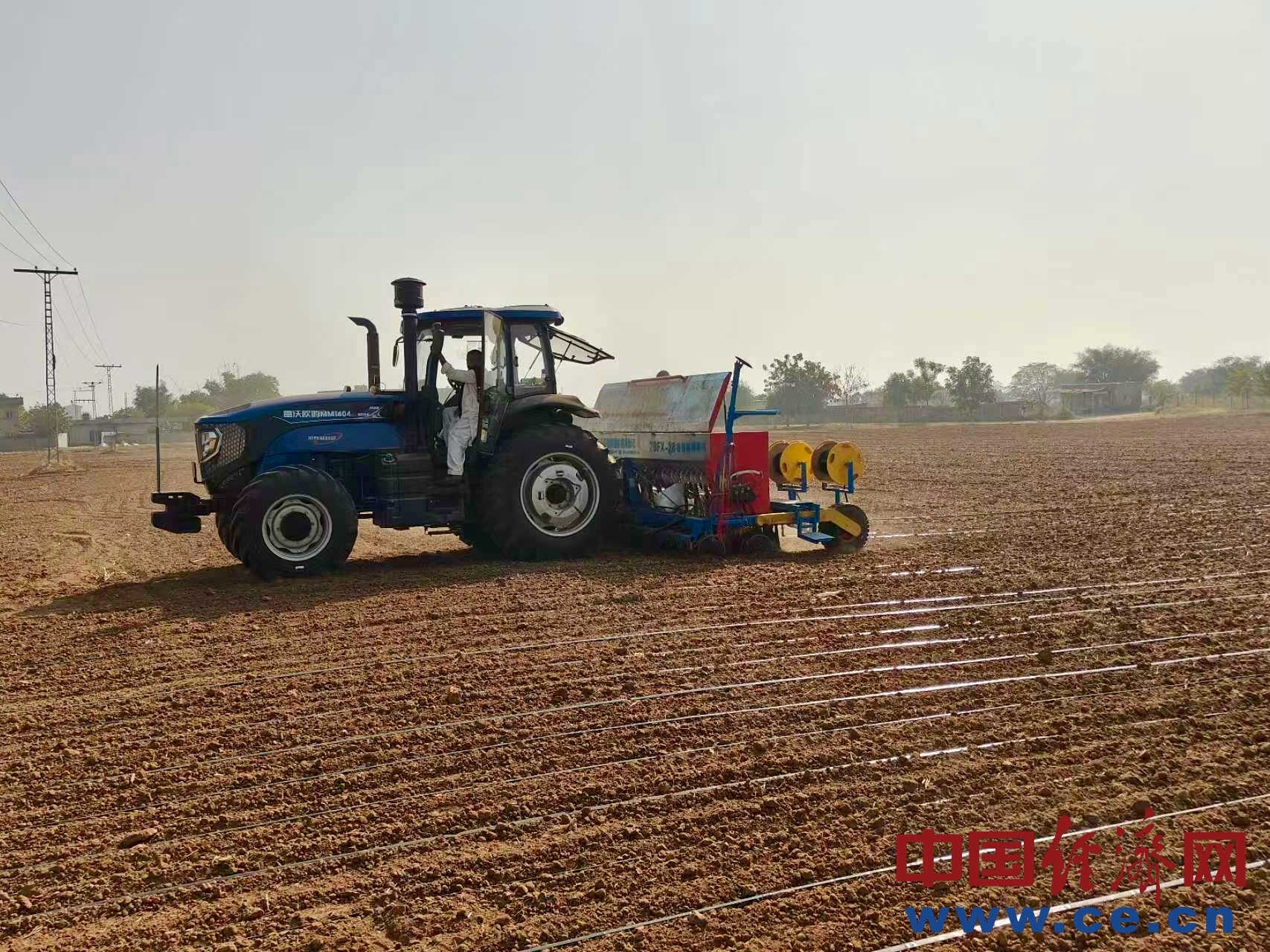
Wheat sowing on drip-irrigation plots by Tianye Group in Rawalpindi. [Photo/Lin Ping]
Scaling Roadblocks
Notwithstanding the evident results of demonstration programs, Chinese irrigation technologies have struggled to scale across Pakistan. The gap between successful trials and real-world rollout points to structural shortcomings on the ground.
"In China, massive investment goes to water conservancy infrastructure to stabilize water supply for large-scale farming. Modern irrigation systems require steady power and water access — conditions that remain unreliable in rural Pakistan," Lin Ping observed.
Cost stands as another major barrier. Liu Yalou, Marketing Manager at Shanghai Huawei Agritech Group, stressed that Chinese models provide tailored, all-in-one solutions based on regional conditions, crop types, water availability as well as local budget constraints. Though Chinese technologies boast significantly higher cost-effectiveness than Western or Israeli alternatives, most smallholders still lack affordable credit and government support to cover upfront investments.
"Huge disparities exist in national agricultural subsidies between China and Pakistan. While China subsidizes farmers for adopting advanced irrigation technologies, Pakistan provides negligible fiscal support, with limited public funding rendering equipment costs prohibitive," said Dr. Muhammad Ali Raza, a Pakistani scientist at Gansu Academy of Agricultural Sciences (GAAS).
Renewal Ahead
Amid these hurdles, fresh momentum for China-Pakistan irrigation cooperation has emerged over the past two years.
In September 2025, China and Pakistan jointly issued a 2025-2029 action plan to foster an even closer China-Pakistan community with a shared future in the new era, under which businesses of both countries are encouraged to cooperate in Pakistan's capacity building in drip irrigation.
A series of new landmark projects have been launched under the upgraded Version 2.0 of China-Pakistan Economic Corridor (CPEC). Chinese enterprises, such as DAYU Irrigation Group, Shaanxi Water Development and Construction Group, and Shanghai Huawei Agritech Group, have forged new collaborations in Pakistan on integrated irrigation, smart water management, and customized irrigation systems. Under Pakistani Prime Minister Shehbaz Sharif's Initiative for Capacity Building of 1,000 Agricultural Graduates in China, advanced irrigation technologies also feature as a core priority.
"Pakistan holds vast potential in the irrigation sector," Lin Ping maintains. In Xinjiang, her company's home region that shares similar climate and soil conditions to those in Pakistan, crop yields have risen to rank among China's highest after integrated drip irrigation technologies were first adopted there in the late 1990s.
For a nation grappling with water scarcity and food insecurity, seizing this window for China-Pakistan irrigation cooperation is not merely an opportunity, but an urgent necessity. Pakistan's future harvests will be shaped by technology imports, and above all, by its own policy and investment efforts today.
(Editor: liaoyifan )