


By Meng Fanrong
SHANGHAI, June 17, (China Economic Net) - A Pakistani scholar and lecturer from the University of Peshawar received an honorary credential at the opening ceremony of the 16th International Exhibition of Traditional Fine Arts in Shanghai on June 11. The exhibition, featuring artworks from 38 countries and regions, showcases the preservation and innovation of traditional art in the digital age through diverse forms including painting, ceramics, embroidery, enamel, lacquer art, sculpture and digital art.
The recipient, Ms. Hira Ali, who is currently pursuing her PhD in artistic theory at the Shanghai Academy of Fine Arts, Shanghai University, described the experience as “very surreal.” “Local and international artists here are growing side by side,” she noted. “You can show your talent and abilities on various platforms, creating a welcoming and encouraging environment.”
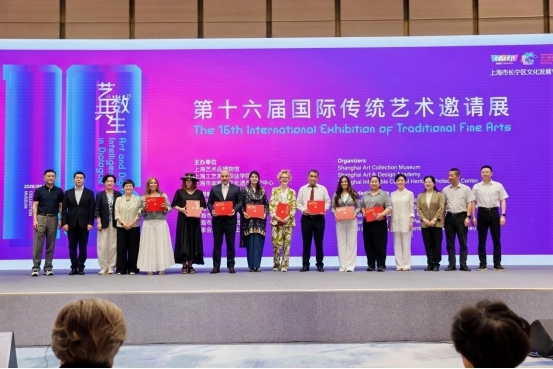
Ms. Hira Ali and other recipients of certificates at the 16th International Exhibition of Traditional Fine Arts. [Photo provided to CEN]
Her recent calligraphic series, currently on display at the China Academy of Arts in Hangzhou, blends the vibrant colors of Shanghai’s urban landscape with the flowing script of traditional Pakistani and Urdu calligraphy. The result is a visual dialogue between two distinct cultural traditions, where Chinese aesthetics meet South Asian heritage on a single canvas. “This is how I experiment with techniques and themes, combining Chinese traditions, Chinese culture and contemporary environments with elements of my Pakistani traditional calligraphy,” she explained.
Another notable work, titled “Chinese Tradition”, depicts a traditional Chinese pagoda reimagined through the lens of Mughal miniature painting. The piece captures the architectural grace of its subject while layering it with patterns and motifs drawn from Pakistan’s rich artistic history.
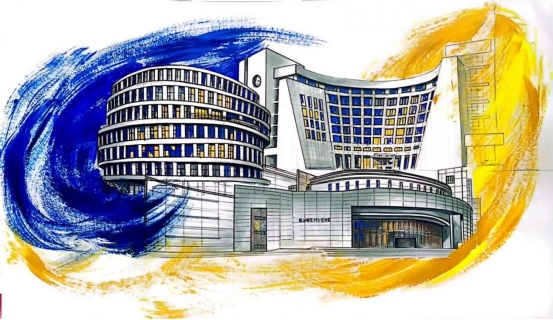
Ms. Hira Ali’s piece titled “My Favorite Scene on Campus”s. [Photo provided to CEN]
Her creative range extends beyond calligraphic fusion. She has also produced Chinese flower paintings on Xuan paper, lacquer works on wood and pegboxes, mother-of-pearl inlays on wooden panels, and eggshell lacquer pieces. Her architectural drawings in pencil colors and acrylic paintings on canvas further demonstrate her versatility across media.
Ms. Hira has worked on projects for the U.S. Consulate General in Peshawar, contributing to the initiative centered on colorful truck culture of Pakistan. She also joined a team dedicated to documenting and preserving the heritage of Buddhist Gandhara in Khyber Pakhtunkhwa, Pakistan. One of her pieces titled “My Favorite Scene on Campus” also received recognition.
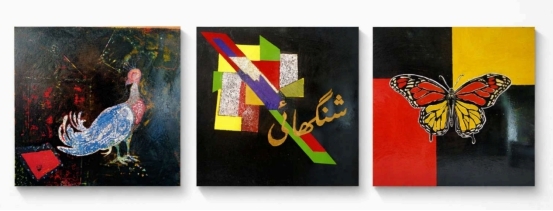
Ms. Hira Ali’s lacquer art workss. [Photo provided to CEN]
Her artistic practice is deeply rooted in her research on Chinese lacquer art, a craft with thousands of years of history in China but one that is declining in Pakistan. Her research has also taken her to Fuzhou in Fujian province, a city known as the heart of traditional lacquer art.
Beyond her own artistic practice, Ms. Hira is working with her supervisor to establish a lacquer art association in Pakistan. Her goal is to integrate her experiences into Pakistan’s academic landscape and revive interest in the art form. “I hope that the diversity of arts in China reaches every corner of the world,” she added.
(Editor: fubo )