


By Rallou Alexopoulou
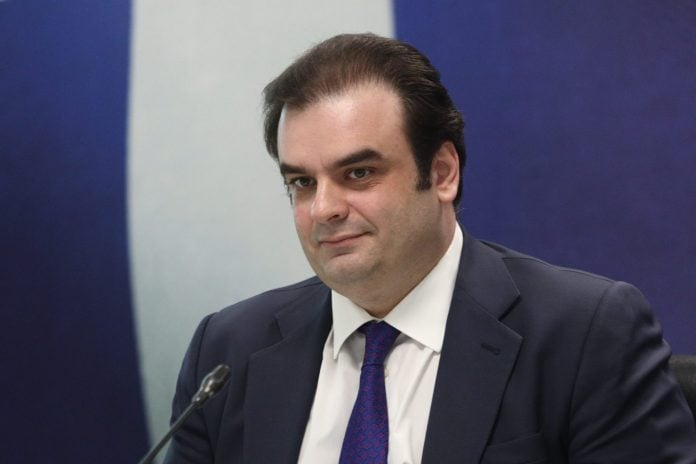
The Minister of National Economy and Finance, Kyriakos Pierrakakis, referred to demographics and the government’s support policies in a post on social media, saying: “The demographic issue is an existential challenge for Greece.”
“The truth is that there are certain problems, issues, and challenges that we struggle to fully grasp at the moment and in the place where they unfold before us, precisely because of the mechanisms through which they unfold. Whether it is the climate crisis, the debt crisis, the way debt builds up over time – with its consequences emerging later – or the demographic issue, these problems develop gradually but their effects are felt in real life.
“One only needs to look at data from demographic projection studies to see that Greece is already facing this challenge. For the first time in the post-war period, the population has decreased. More broadly, Europe as a whole is facing this challenge,” he noted, adding:
Demographics cannot be solved instantly.
In particular, Pierrakakis stressed that “demographics cannot be solved instantly. However, we can remove obstacles: with a more accommodating tax system, with incentives for young people taking their first steps in the labor market, and with policies that allow them to build their lives with stability and a sense of direction.”
“Greece has the fiscal space to advance these policies – and the vision to reach its goals. Step by step, we are making progress and converging with the European average, supporting the families and young people of today and tomorrow,” Pierrakakis said.
Does this tax reform solve the demographic problem? Absolutely not. No one could claim such a thing. But I believe it would be entirely paradoxical not to have a tax system that recognises this problem – this challenge – especially when it is already being felt in everyday life. It was therefore necessary – this was the Prime Minister’s decision and the recommendation of the economic team – to implement a tax reform in Greece that acknowledges this existential challenge ahead of us. This is now being put into practice.
A full package of measures
We are presenting the full package of measures, the broader rationale of this tax reform, also in other European countries, and we are seeing that it receives very positive feedback, precisely because more or less everyone is confronting the same problem, though on different scales. We already see such measures in some countries – for example, preferential tax treatment for families in France – while in others this has not yet occurred.
“We believe this is a measure that will have an impact, and we believe that the approach we are starting to adopt in January is one we will continue. Precisely because the magnitude of the problem, the scale of the challenge, is extremely large.
“Having said that, of course one measure is not enough, nor is one tax reform. Much more needs to be done. It is important that a ministry has been created with this specific focus. It is important that a broader policy framework is in place.
“I believe that, from the full range of strategies, policies, and decisions you have seen this government adopt in recent years, first, we know how to ask the right questions. Second, we know how to continually improve ourselves where necessary. And third, we know very well what needs to be done to keep converging with the European average. Because, at the end of the day, in 2019, in terms of income measured by Purchasing Power Parity (PPP), we stood at 62% of the European average, and today we stand at 70%.
“We have made progress, but we are still not where we want – and are able – to be. And I assure you: we can get there,” Pierrakakis said.
(Editor: wangsu )