


By Antonis Tsimplakis
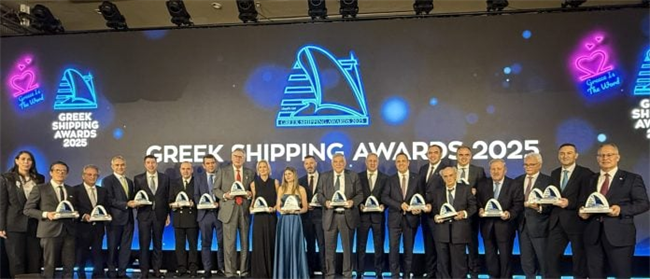
The global leadership of Greek shipping was highlighted at the 22nd Lloyd's List Greek Shipping Awards.
In a period of major challenges at the international level and in a world changing at breakneck speed, the Greek shipping community has once again proven that it has all the foundations needed to maintain its global dominance in the years ahead.
With leading figures, a maritime DNA, major deals, technological advantages, and a new generation already leaving its own mark on the industry.
The Minister of Maritime Affairs and Insular Policy, Vasilis Kikilias, emphasized that Greek shipping controls 20% of global transport capacity, while the Greek economy accounts for only 2% of the European Union's GDP, also noting that shipping can serve as a key pillar for strengthening Europe's competitiveness.
Greek shipowners choose modern second-hand ships
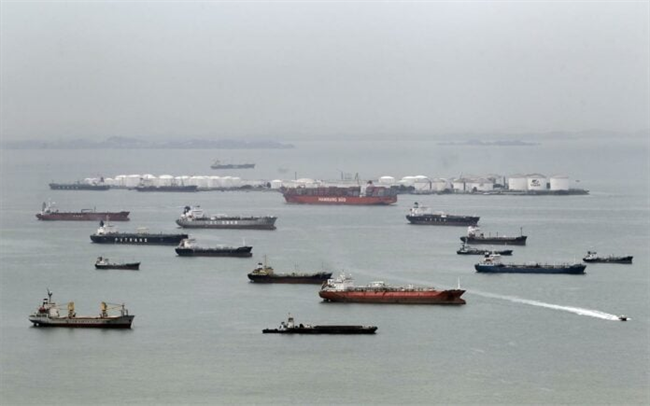
Greek shipowners took advantage of opportunities in the second-hand market to renew their bulk carrier fleets in 2025.
The limited availability of berths in Asian shipyards, the high cost of new construction, and the uncertainty surrounding new green fuels brought the second-hand market to the forefront, with sales of older bulk carriers and, at the same time, selective purchases of newer and eco-friendly vessels.
As Xclusiv noted in its analysis, the data shows that Greek shipowners are moving ahead with a smart fleet realignment.
They are selling older Supramax and Panamax vessels at favorable prices and buying newer eco-tonnage, where the fundamentals are more positive, keeping their fleet balanced in anticipation of a medium-term positive cycle.
Greece has 126 ships, a figure that shows Greek shipowners remain extremely active, though far more selective compared with the heavier buying phases of previous cycles.
In terms of sales, Greece is in first place with 139 sales, followed by Japan with 114 and China with 104.
More specifically:
Focusing on Greek shipowners, the 126 ships acquired this year are mainly concentrated in the Handy, Ultramax, and Kamsarmax categories.
Handies lead with 42 units, followed by 24 Kamsarmax and 20 Ultramax.
These three categories alone account for more than two-thirds of the market.
The age distribution reinforces this focus: Greeks are strongly targeting ships between 6 and 15 years old, where prices remain reasonable and commercial flexibility is sufficient to support a longer-term investment horizon.
Investments in Ultramax and Kamsarmax vessels aged 0–5 years are also notable, showing that for some groups the transition to an eco-fleet remains a key strategic priority.
On the sales front, the 139 ships sold by Greeks consist mainly of Supramax (46) and Panamax (40) vessels.
The picture aligns perfectly with the purchasing pattern. Greek shipowners are offloading older Supra and Panamax vessels and replacing them with newer, larger-capacity or more fuel-efficient ships.
In terms of age distribution, the Supras sold are mainly in the 11–25-year range, while the Panamaxes are largely between 16 and 25 years old.
(Editor: liaoyifan )