


By Paris Tsirigotis
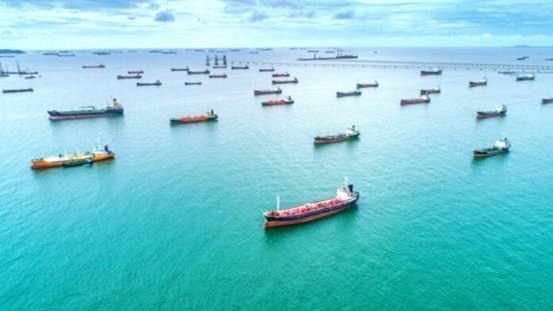
The Greek orderbook is expected to exceed the 700-ship mark in 2025 for the first time in a long period, as 727 vessels are currently under construction, confirming Greece’s leading role in shaping the global fleet of the next decade.
The data in Xclusiv Shipbrokers’ monthly report for December point to a clear strategic choice: fleet renewal, a focus on efficiency, and positioning in markets of enduring importance to global trade.
In an environment of increased uncertainty — ranging from geopolitical tensions to the transition toward stricter environmental standards — Greek shipowners have not only refrained from “stepping on the brakes,” but have methodically increased their orders, strengthening their position in key shipping segments.
Tankers are the protagonists
The most striking picture emerges in tankers. With 317 tankers on order, Greek shipowners control approximately 25% of the global tanker orderbook, maintaining their leading position worldwide.
Stable dynamics
The Greek presence in bulk carriers also remains strong, with 169 ships under construction, corresponding to approximately 12% of the global orderbook.
The distribution reveals a clear preference for Panamax, Kamsarmax and Post-Panamax vessels, which together account for nearly 60% of Greek orders in this segment.
This choice is not accidental. These vessel sizes offer flexibility, improved energy efficiency, and easier adaptation to future fuels.
At the same time, the global bulker fleet has an average age of 12.4 years, with more than 28% of vessels over 16 years old, creating the conditions for a wave of replacement in the coming years.
Selective presence
In the container ship market, Greek orders amount to 141 containerships, or approximately 11% of the global total.
The strategy is clearly selective: Feeder and Neo-Panamax vessels dominate, accounting for more than 70% of Greek orders.
At the global level, the containership orderbook has surged to 34% of the active fleet in TEUs, while the average fleet age stands at 13.8 years and nearly 46% of ships are over 16 years old.
The Greek strategy reflects not only the need for renewal, but also a shift toward markets with stable demand, such as regional and major international routes.
Long-term investments
The Greek presence in gas carriers is also particularly significant. In LNG carriers, Greek orders total 54 ships, representing approximately 18% of the global orderbook, with the vast majority in the 141,000–200,000 cubic meter range.
The average age of the global LNG fleet is just 9.8 years; however, the orderbook remains high, confirming the long-term importance of natural gas in the global energy mix.
Similarly, in LPG carriers, Greek owners have 46 vessels under construction, or 15% of the global orderbook, with a strong emphasis on VLGCs, which form the backbone of international LPG trade.
Strategic consistency
The picture emerging from the Greek orderbook of 727 ships is not coincidental.
On the contrary, it reflects a coherent strategy: investment in technologically advanced vessels, diversification across segments, and preparation for a more demanding regulatory and environmental landscape.
In an era of transformation for global shipping, Greek shipowners are demonstrating that they are choosing not merely to be present, but to stay ahead of developments.
(Editor: fubo )