


By Paris Tsirigotis
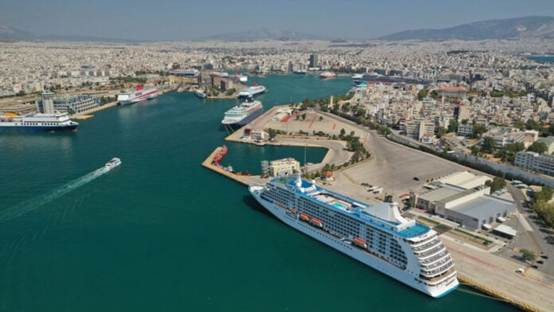
The economic importance of the Piraeus logistics supplying cluster is significant for the Greek economy. The concentration of logistics, transport and shipping services businesses in the wider Piraeus area and Western Attica creates direct and indirect jobs, attracts investments and boosts public revenues.
At the same time, a strong logistics hub increases Greece's attractiveness as a gateway for goods to the European market, improving its international competitiveness.
However, the development of the port area as a logistics cluster also presents significant challenges.
The limited availability of space near the port, traffic congestion in the urban environment and environmental pressures require careful planning and policy coordination.
The transition to more sustainable forms of transport and the adoption of green logistics practices, such as electromobility, energy-efficient warehouse operation and emission reduction, are necessary conditions for the long-term sustainability of the cluster.
The future prospects of Piraeus as a supply cluster in the logistics sector remain particularly positive.
The development of Thriasio as a national logistics hub, the strengthening of rail connections and the exploitation of automation and artificial intelligence technologies can further upgrade the role of the port.
With close cooperation between the public and private sectors and with targeted investments in infrastructure and human resources, Piraeus can establish itself as a model logistics cluster, operating as a key driver of sustainable economic growth for Greece.

From the position of the president of the Hellenic Chamber of Commerce and Industry:
The president highlighted the need to capitalize on the positive momentum in Greek-American economic relations, for the benefit of the wider Piraeus area, which is currently a focus of investment interest, with its shipyards, the port of Elefsis, Thriasio and logistics.
He also stated that the Hellenic Chamber of Commerce and Industry has positioned itself for the development of IMEC and the role that Piraeus can play in this effort with India, which, as is well known, also has the support of the USA.
No opportunity should be wasted, but speed of decision-making and elimination of bureaucracy, which in the past acted as a deterrent to investments, are required.
Improving the investment climate remains a key objective of the Chamber, which, through a constructive dialogue with the state, will continue to submit proposals to strengthen the financing of the economy, especially of small and medium-sized enterprises.
Regarding maritime entrepreneurship, the president believed that with the right strategy and support, Piraeus can develop into a global center of maritime innovation.
In fact, the Piraeus Chamber of Commerce and Industry has submitted its own proposal, the implementation of which will activate the clusters created by entrepreneurship, which surrounds Piraeus as a maritime center with a global reach, but also as a commercial and industrial center, where clusters operate in parallel that create a positive trend in business, and therefore in the economy in general.
Piraeus can attract research centers, investments, and technological collaborations, which will strengthen local, and not only, entrepreneurship, but will also have a positive effect on the development of the logistics supplying cluster.
The port infrastructure of Piraeus is the foundation on which the logistics cluster is built.
The proximity between the entities operating "around" the port reduces transaction costs, facilitates the flow of information and enhances innovation, making the entire system more efficient. Of particular importance is the transshipment operation, through which Piraeus acts as an intermediate distribution hub to other ports in the Mediterranean and the wider region.
It should not be overlooked that Piraeus, with the Chamber of Commerce and Industry, holds the important position of vice-president in ASCAME, which represents the majority of the 300 port-related Chambers of the Mediterranean from 23 countries.
This position allows the implementation of port-centered development strategies pursued by the Chamber in recent years, within the framework of the development policy of all clusters related to Piraeus.
A critical factor for the success of Piraeus as a logistics hub is intermodal connectivity.
The port's rail connection with Thriasio and, through it, with the markets of the Balkans and Central Europe, offers significant advantages in terms of time and transport costs.
However, the rail infrastructure needs immediate upgrading, with an emphasis on weather resistance, but also on the digitalization of all control centers for security issues.
In addition, the plans for the rail coverage of the ports should "run", as this issue plays a leading role in logistics.
Logistics activities are no longer limited to simple storage, but are expanding to value-added services, such as packaging, labeling, assembly, quality control and cross-docking.
Through these services, businesses can adapt their products to the needs of individual markets, increasing the flexibility and speed of response of the supply chain.
Piraeus is developing into one of the most important logistics hubs in the Mediterranean and SE Europe, constituting a typical example of a supply cluster with international reach.
Its strategic location at the crossroads of maritime trade flows connecting Asia, Europe and Africa, combined with the upgrading of its port and logistics infrastructure, allows it to function not only as a gateway for the entry and exit of goods, but also as an integrated hub for the provision of logistics and shipping support services.
This role is of particular importance in the modern globalized environment, where the speed, reliability and cost of supply chains are critical factors of competitiveness.
(Editor: liaoyifan )