


By Petros Stefanis
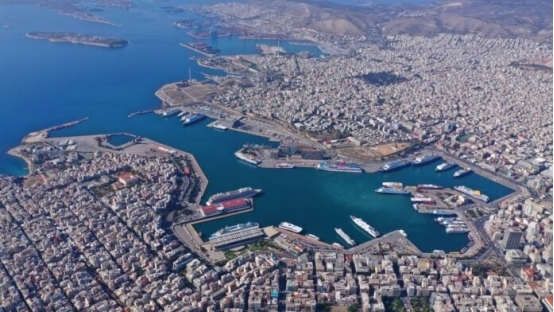
The port of Patras also, is now entering a new development trajectory, following the approval of the master plan by the Council of State, a development that removes a multi-year institutional impasse and paves the way for the implementation of critical investments.
The port is expected to gradually transform into a multifunctional hub of national importance, combining freight, passenger, energy and tourism activities, with an emphasis on combined transport, the green transition and the development of cruises.
With a clear institutional framework, mature infrastructure and strategic geographical location, Patras is now claiming an upgraded role on the European and Mediterranean map of logistics, energy and maritime tourism.
According to information from Naftemporiki, the next step will be the signatures of the relevant ministries and the issuance of a Presidential Decree in order for the master plan to be published in the Official Gazette and become fully enforceable.
Upon the completion of the process, a clear institutional framework is now in place for the implementation of investments and upgrade projects, which strengthen Patras’ position as the country’s gateway to Western Europe and the Adriatic.
This development is considered of key importance for the port, as it removes a long pending issue and allows for the acceleration of interventions in passenger, freight and supporting infrastructure, with multiplier benefits for the local and regional economy.
The president and CEO of the Port of Patras Authority, Panagiotis G. Anastasopoulos, described the approval of the master plan “as a pivotal point for the future of the port of Patras.”
As he emphasized, “this specific decision constitutes a strategic intersection for the role that a modern public port can and should play in the Greek economy.”
According to Anastasopoulos, the approved master plan is not limited to fragmentary interventions or individual infrastructure projects, but constitutes a coherent and long-term development roadmap.
A plan that completely redefines the operation and development orientation of the port, with a horizon of decades, strengthening its interconnection with the supply chain, trade and transport.
Its implementation – as he underlined – is expected to upgrade the role of Patras as a gateway to international flows, contributing substantially to regional development and the overall competitiveness of the Greek port economy.
He added that the master plan creates the foundations for sustainable development, investments and many new quality jobs in Western Greece and the country as a whole.
Energy role
The master plan foresees the creation of a special base in the port of Patras that will serve research and work on hydrocarbons (oil and natural gas) at sea.
This means that the port will not only be used for transport, but will also function as a support center for marine energy projects.
Machinery can be stored and transported, special ships and technical crews can be serviced, and work to be carried out on marine platforms can be organized.
This creates new highly skilled jobs and paves the way for serious investments from companies with know-how.
It is noted that following the agreement between ExxonMobil, Energean and HELLENiQ Energy for “Plot 2” in the northwestern Ionian Sea, the first exploratory drilling is expected to take place in late 2026 or early 2027, provided that all permits and approvals have been secured from the competent authorities.
This well will be the first exploratory offshore drilling in Greece since 1981, when the drilling that led to the discovery of the Katakolo hydrocarbon deposit was completed.
Over the past two decades, the only offshore drilling carried out in Greece has been the production wells in Prinos, carried out by Energean.
In this way, Patras acquires a more important role in the country’s energy planning, as it becomes a hub for mining projects in Western Greece and the Mediterranean.
Transport
Another important element included in the port’s master plan is the construction of a new freight pier, directly connected to the railway connection, an investment that will structurally change its operation.
For the first time, the conditions are being created for real intermodal transport, with a direct interconnection of ship, railway and road network, reducing costs and transport times and enhancing the competitiveness of Greek exports.
Obstacles that until now limited exports and transit activity are being removed, especially in primary sector products.
In this way, the port gains more direct and competitive connections with markets in Italy, Turkey, France and mainly Egypt.
According to information, consultations are also underway with the Egyptian side on this issue for the creation of a commercial maritime connection between Patras and Egypt, a development that will further strengthen the port’s transit role in the Mediterranean.
(Editor: fubo )