


By Antonis Tsimplakis
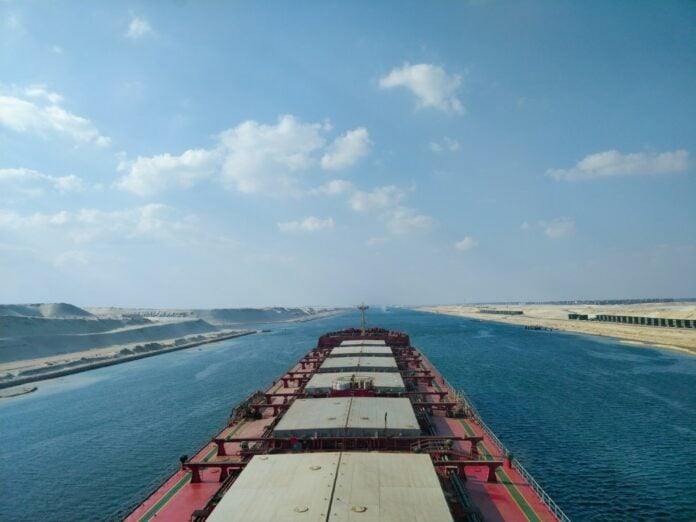
Chinese and Greek shipping companies have resumed services through the Suez Canal, which has seen a sharp decline in transits due to Houthi attacks on commercial vessels in the Red Sea.
According to data from Lloyd’s List Intelligence, dry bulk carriers and tankers linked to Greek interests have now recorded four consecutive quarters of increased transits through the Red Sea. At the same time, transits by Chinese-owned ships have also returned nearly to levels seen before the Houthi attacks began in November 2023.
A similar trend has been observed in other countries as well.
For example, many ships bound for the United Kingdom—which until recently opted for the Cape of Good Hope route—have begun to return to Suez, albeit in small numbers.
In recent weeks, isolated transits by ships linked to US interests have also been recorded, while 10 ships linked to Norway have opted for Suez. The Norwegian Maritime Authority’s guidance, which strongly advises ships to avoid transiting the area, remains unchanged despite the cessation of direct attacks on vessels.
While the majority of companies are still avoiding a full-scale return, part of the recent increase in overall transits has been driven by ships linked to countries previously considered high-risk. According to Lloyd’s List Intelligence data, December saw the highest volume of container ship transits through Bab el-Mandeb, measured by tonnage, since January 2024, as liners tested the passage with larger vessels.
Maersk’s rerouting of its first mainline service through the Suez Canal last week initially signaled that a return was now possible for the industry as a whole. But CMA CGM’s withdrawal of three Red Sea routes during the same week signaled otherwise, as the shipping industry continues to grapple with concerns over a full return.
The data
The Suez Canal is entering a phase of steady recovery, according to data from the Suez Canal Authority. Per their reports, financial and operational data for the first half of the 2025/2026 financial year has shown a clear improvement.
The 18.5% increase in revenue during this period, combined with the rise in ship transits and net tonnage, reinforces the assessment that the Suez Canal is recovering, albeit gradually.
Shipping as a driver of Europe’s strategic role
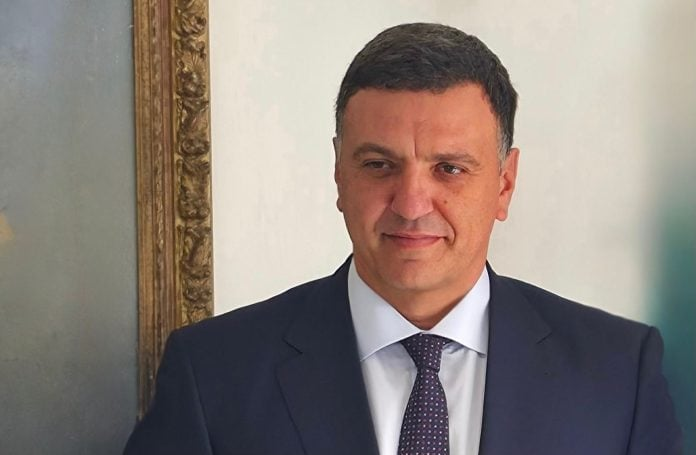
The Minister of Maritime Affairs and Insular Policy, Vassilis Kikilias, described shipping as a driving force behind the EU’s competitiveness in his speech at the Hellenic Chamber of Shipping's New Year’s event.
The minister focused on the Draghi plan to strengthen EU competitiveness, emphasizing shipping, “which is Europe’s last chance to compete with America and China,” he stressed, adding that a year after the plan was made public, it remains “on paper.”
Sending a message to Brussels, the minister reiterated that Greek-owned shipping constitutes 60% of the European fleet, stressing that Greece’s voice must be heard within the European Union.
The minister addressed the green transition of shipping, for which, as he noted, many factors must be taken into account.
In particular, he spoke about the additional costs that will be generated and passed on to consumers, resulting in inflationary pressures for all European economies.
The minister emphasized that the ministry’s main priority is maritime safety, while he also referred to the role shipping plays in the economy and job creation.
In addition, Kikilias noted that shipping and tourism are the two pillars of the Greek economy.
Finally, he underlined Greece’s role on the global map, noting that “our seas and ports are at the heart of global strategy.”
(Editor: wangsu )