

By Wang Kai
FAISALABAD, Jul 15 (China Economic Net) - Pakistan's University of Agriculture Faisalabad (UAF) and the Chengdu Institute of Standardization signed a memorandum of understanding (MoU) last week to strengthen cooperation in agricultural standardization, food quality, research, and talent development.
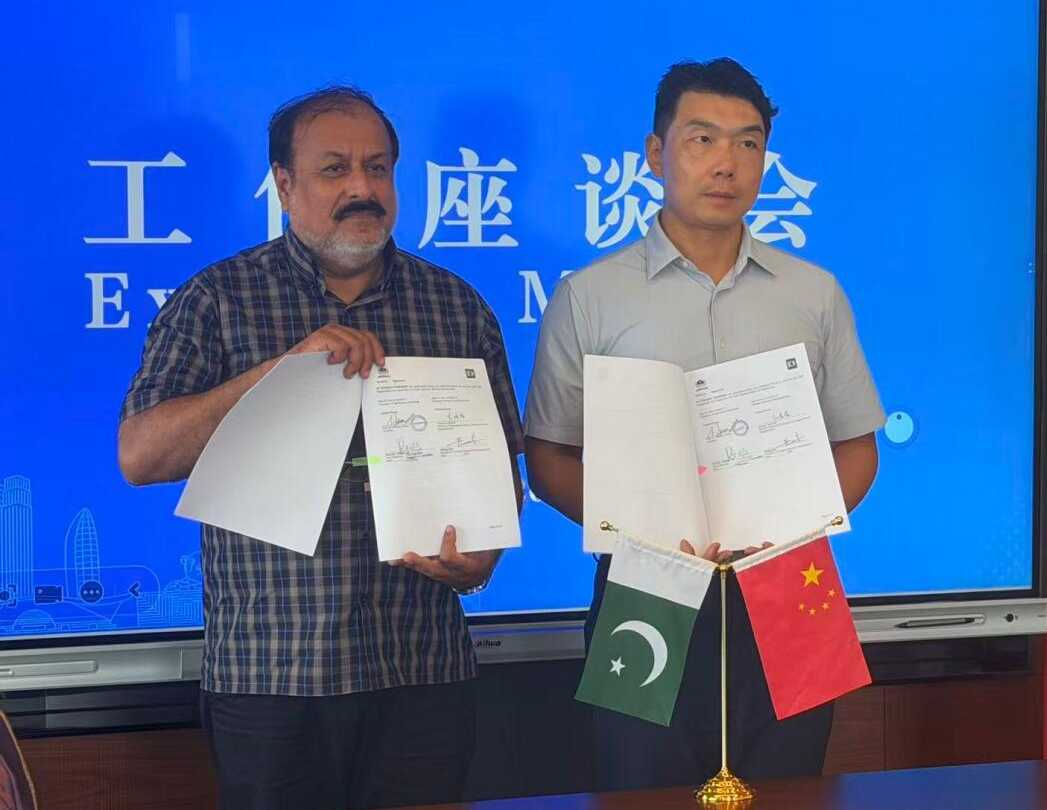
Chengdu Institute of Standardization, University of Agriculture Faisalabad (UAF) signed an MoU on Jul 9, 2026 in Chengdu, China. Photo provided to China Economic Net.
The agreement, aiming to help improve the competitiveness of Pakistani agricultural products in international markets, outlines cooperation in personnel exchanges, joint research, academic collaboration, and capacity building, reflecting growing China-Pakistan cooperation in agricultural modernization.
Under the MoU, the two institutions will promote visits by experts, jointly organize training programs on standardization and quality management, host academic forums and conferences, and encourage participation in each other's major international events.
The partnership also includes joint research in key areas such as standards, metrology, inspection, testing, certification, accreditation, and market access. Both sides will support collaborative research projects and establish a long-term mechanism for scientific cooperation.
To facilitate knowledge sharing, the partners will build a shared database of information and research resources, exchange expert networks, and expand the dissemination of research outcomes through their respective academic platforms.
The agreement further covers faculty development, student and staff exchange programs, collaborative curriculum development, academic publications, and jointly organized seminars, workshops, and international conferences.
Dr. Waseem Akram, Professor at the University of Agriculture Faisalabad, described standardization as the foundation of agricultural quality improvement.
"The first and most important thing is quality," he said. "Once standards are established, there should be no compromise on products that fall below them. China has already developed a clear roadmap for standardization, and we hope to establish a similar system in Pakistan."
He noted that Pakistan's rapidly expanding food industry requires stronger quality assurance systems supported by internationally recognized laboratories.
"Our food sector is growing very fast. ISO-certified laboratories, together with research collaboration with the Chengdu Institute of Standardization, can help us establish provincial-level biotechnology, food science, and technology laboratories," he said.
According to Dr. Akram, cooperation between the two institutions will also contribute to training young researchers and improving Pakistan's understanding of modern quality management systems.
Dr. Abid Ali, former associate professor of UAF, pointed out that Pakistani farmers continue to rely heavily on chemical pesticides, particularly in cotton, mango and rice production, creating challenges for both environmental sustainability and export quality.
"In cotton production, pesticides are sprayed many times during a single season, while harvesting is still largely done manually by women who are directly exposed to chemical residues. Mangoes and rice, two of Pakistan's leading agricultural exports to China, are also vulnerable to improper pesticide use," he said.
"We need research on greener alternatives and safer production methods, which will support the goals of Green Pakistan Initiative," he added.
The partnership comes as Pakistan seeks to modernize its agricultural sector through improved quality standards, scientific innovation, and greater alignment with international certification systems, while deepening cooperation with China in agricultural technology and sustainable farming.
In Pakistan Export Strategy 2023-2027, low taste and quality standards, largely unchecked use of pesticides and fertilizers, outdated production technology, lack of traceability, poor implementation of hygiene measures, etc. are identified as key factors constraining Pakistan’s agriculture exports.
(Editor: liaoyifan )