


In Hohhot, AI, cheap computing and three years of free rent are turning solo entrepreneurs into businesses
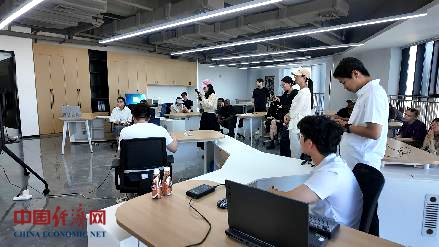
Yungu OPC Community in Hohhot, the capital city of China’s Inner Mongolia Autonomous Region. [Photo/Wang Kai]
by Wang Kai
HOHHOT, Sept. 21 (China Economic Net) - At an open-plan desk in the Yungu OPC Community in Hohhot, the capital city of China's Inner Mongolia Autonomous Region, Li Xiaoyu stares at his screen as AI generates scenes for a short drama frame by frame. He is, quite literally, a company of one. A few months ago, producing a three-to-five-minute AI-generated drama could leave him gasping under the weight of computing costs. Now the same production costs 2,000-3,000 yuan less. On a monthly basis, he enjoys a revenue of 300,000-500,000 yuan.
The community where Mr Li works officially opened in June 2026. It is Inner Mongolia’s first dedicated community for “One Person Companies” (OPCs). Spread across 24,000 square metres, it has workstations, meeting rooms and pitch halls, all waiting to be filled by more entrepreneurs who are, in effect, one-person armies. The plan is to house 100 such companies by the end of the year.
Li’s story is being repeated in dozens of Chinese cities, But Hohhot’s offer may be among the most tangible.
“Just bring your laptop”
The slogan of the Yungu OPC Community is simple: show up, and the rent and utilities are covered.
Companies moving in can choose an individual workstation or an office of 100-300 square metres, with rent waived for three years. On computing power, the community has built an aggregation platform that negotiates bulk rates with large-model providers. Resident teams can bypass queues and receive subsidies for computing transactions of up to 2m yuan.
For short-drama producers, rendering a film once meant waiting three hours to a full day. They can now use a priority channel, roughly doubling efficiency. Computing costs for comparable quality have fallen to around 3,000 yuan, almost half their previous level.
“You can simply bring your laptop here and start a business,” says Li Yunpeng, another entrepreneur in the community
The promise of a “zero-cost start-up” has quickly attracted applications. By the middle of 2026, 20 companies had moved in, working in fields including AI-generated dramas, intelligent technologies and cross-border digital trade. Five were already collaborating on a regular basis.
Hohhot can afford to be so generous because it happens to sit at the source of the resource on which these businesses depend: computing power.
At Helinger New Area where the community is located, the intelligent-computing capacity has reached 122,000 PFLOPS, putting it among China’s eight national computing hubs.
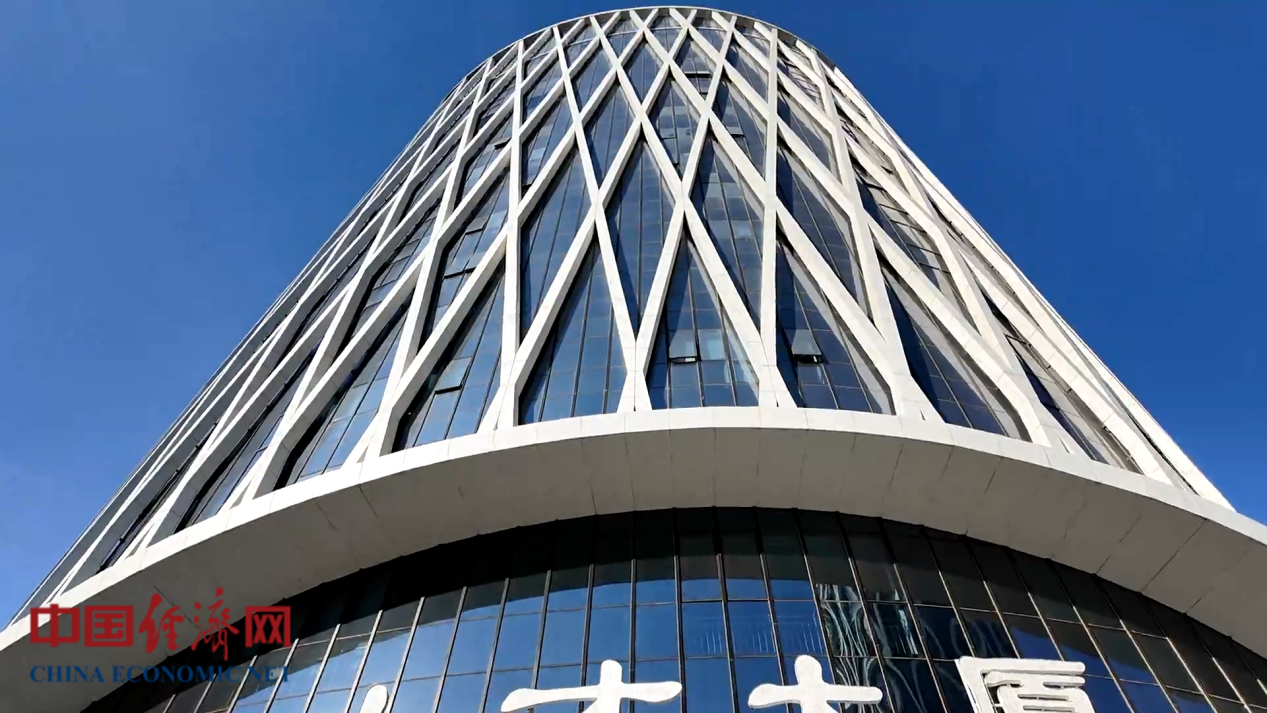
Yungu OPC Community in Hohhot, the capital city of China’s Inner Mongolia Autonomous Region. [Photo/Wang Kai]
More important is the cost structure. More than 80% of the area’s electricity comes from green power, mostly wind and solar. Its cool climate also cuts the energy required to cool servers by 20-30% compared with Beijing, Shanghai, Guangzhou and Shenzhen. Taken together, electricity and cooling costs can make overall computing costs three to four times lower.
Until now, much of that computing power has effectively been shipped elsewhere for technology companies to use. The local government’s new calculation is straightforward: keep the users of computing power where the computing power is produced.
Betting on the super-individual
Hohhot’s bet on OPCs makes more sense against a much larger national trend.
By May this year, China had 426 OPCs, distributed in 65 cities. In the first six months alone, over 160,000 new OPCs were registered in the AI sector alone, up 20% year on year.
A calculation by the Central University of Finance and Economics puts some numbers behind the idea. For every 1 yuan spent on AI by an OPC, it estimates, the technology can substitute for roughly 72 yuan of human development costs.
Local governments have noticed. Shenzhen issued an action plan in January aiming to establish more than ten OPC communities of at least 10,000 square metres by the end of 2027 and foster more than 1,000 AI start-ups. Beijing’s Zhongguancun AI Beiwei Community has already attracted more than 70 OPCs, offering entrepreneurs a “full-stack resource package” that includes token, computing-power and data vouchers. Suzhou Industrial Park has proposed building more than ten model OPC communities covering at least 1m square metres.
Hohhot is trying to differentiate itself by bundling three things: a free-trade zone, green computing power and OPCs.
The community itself acts as a kind of virtual partner, connecting members with clients, offering guidance on legal and corporate matters, and bringing together players across the supply chain.
“In the next step, we’ll build an aggregation platform that integrates resources from over ten large model providers, thus offer enterprises multimodal (text, video, etc.) integrated services,” Ren Qian, a person in charge of the Yungu OPC Community told China Economic Net.
(Editor: wangsu )