


By Letta Kalamara
lkalamara@naftemporiki.gr
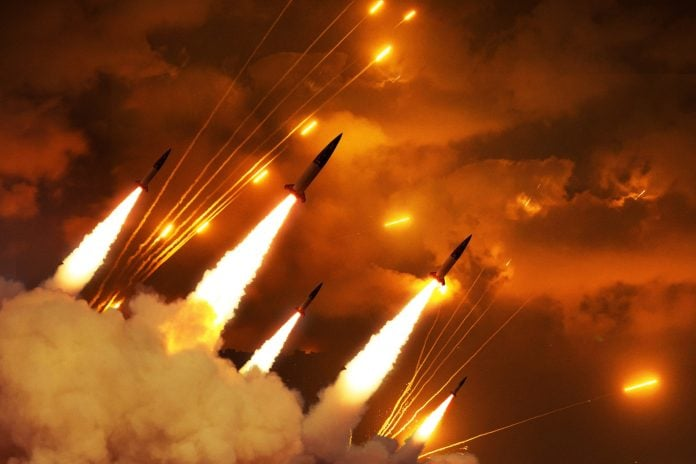
Greek defence companies are being urged to capitalize on the European defence industrial ecosystem. By leveraging cross-border partnerships and interoperability, firms can seize the opportunities within the European Defence Projects of Common Interest (EDPCIs) under the European Defence Industry Programme (EDIP).
On September 28, 2026, the first five European Defence Projects of Common Interest (EDPCIs) received approval from the Council of the European Union. They are DECODER, SPACE, IMSD, EU FIAMD and Eastern Flank Watch, covering air and missile defence, unmanned aerial vehicles (drones) and counter-drone systems, maritime and seabed defence, space capabilities, and surveillance of the Eastern Flank.
The focus is shifting towards production, procurement and deployment. The mechanism requires cross-border cooperation and must ultimately deliver genuine, usable capabilities. This dual character — capability and industry — is the defining feature of EDIP and the EDPCIs, which link common capability priorities with a stronger European Defence Technological and Industrial Base.
As Greek defence industry executives pointed out, "the Greek defence industry can go further: it can enter major global and European programmes with a genuine share of the work in design, production, certification and delivery, as an equal partner."
"This happens when manufacturers become meaningfully integrated into supply chains, with substance, planning and organisation, rather than simply expressing an intention," they noted.
Greece and Cyprus participation
Against this backdrop, the challenge for the Greek defence industry is to offer a differentiated, interoperable and scalable solution within the capability architecture and the European defence value chain. Industry experts stressed that Greek companies need to know, before the final procurement call, where they can fit in, what level of maturity they can demonstrate, whom they can partner with, whether they can scale up and where they can be integrated.
Greece and Cyprus are included in the first EDPCI portfolio, with Greece participating in four of the five projects and Cyprus in all five. This paves the way for common defence capability priorities at industrial scale, joint procurement and, ultimately, operational deployment.
States shape demand, while industry turns that demand into European defence capability. The value of an EDPCI will ultimately be measured by production, procurement and operational deployment. The key now will be to turn common capability priorities into systems that can be deployed and develop into scalable industrial capacity and resilient cross-border supply chains.
Four new proposals in the pipeline
Beyond the five initial EDPCIs, four additional project proposals are being prepared: ARTISYS – Artillery Systems, covering joint procurement of artillery systems and ammunition, production scaling and new systems; ARCADIA – Multi Domain Operation Platform, concerning sovereign digital infrastructure, C2, cloud and AI for multi-domain operations; ERCUL – European Robotic Combat Units for Land Operations, involving robotic combat units with unmanned systems, AI and C2; and EDDS – European Defence Data Space for AI, concerning a common mission and architecture for a European Defence Data Space and AI Factory.
€190bn to be mobilised by 2036
The European Defence Projects of Common Interest (EDPCIs) are part of the €1.5 billion European Defence Industry Programme (EDIP). An initial €325 million has been earmarked from EDIP for the first five EDPCIs, but they are expected to mobilise significantly larger investment over time, exceeding €190 billion at full development by 2036.
In other words, EDIP provides the initial funding for establishing and developing the EDPCIs, while the EDPCIs themselves are projects of a much larger scale.
As industry sources told Naftemporiki, "under the proposed amendment to the Work Programme, the structure is threefold: €300 million for the deployment of the five proposed EDPCIs, or €60 million per project; €11.5 million for the five coordination and support actions, or €2.3 million per project, for the roadmaps; and €13.5 million for further maturing four additional proposals, with a proposed ceiling of €3.375 million per proposal."
The second figure, estimated at around €190 billion through 2036, is of a different nature. It represents the combined funding ambition for implementing the five major projects, primarily through national investments and procurement, potentially complemented by future EU support.
Indicatively, the figure is estimated at €3.5 billion-€5 billion for DECODER, €43 billion-€72 billion for IMSD, up to €24 billion for SPACE, €55 billion-€80 billion for EU FIAMD, and up to €100 billion for Eastern Flank Watch by 2036.
(Editor: liaoyifan )