



HULUNBUIR, Oct. 31 (China Economic Net) —The Hulunbuir E-commerce Industrial Park in north China's Inner Mongolia Autonomous Region is exploring two-way trade opportunities with Pakistan, seeking to introduce Chinese consumer goods to the Pakistani market while bringing Pakistani agricultural products to Chinese consumers through cross-border e-commerce channels.
Wang Bin, head of Hulunbuir E-commerce Industrial Park, told China Economic Net that e-commerce industrial park is open to exploring imports of Pakistani products, including pine nuts, rice and sesame seeds, while helping local Chinese enterprises expand overseas sales of meat, textiles, agricultural products and other consumer goods.
“We can explore importing Pakistani pine nuts, rice and sesame seeds to the Chinese market,” Wang said, highlighting the potential to connect businesses and consumers in both countries through e-commerce and international trade channels.
He said the park is also interested in sharing food-processing expertise with Pakistani businesses, particularly modern techniques for slaughtering, processing and preserving beef to maintain its freshness and quality.
It is to be noted that Pakistan already exports boiled beef to China these technologies & techniques would help to enhance exports. According to Chinese customs data, Pakistan shipped 2.38 million kilograms of boiled beef under HS code (16025090), with exports valued at $14.52 million.
Such cooperation could create opportunities for Pakistani agricultural exporters and food businesses to access China’s market while enabling Chinese enterprises to explore new customers in Pakistan.
Pakistan’s diverse agricultural sector offers products with potential for international trade, while its large consumer market provides opportunities for Chinese companies selling a broad range of goods. Developing two-way trade, however, requires appropriate import approvals, product standards, logistics arrangements and market research.
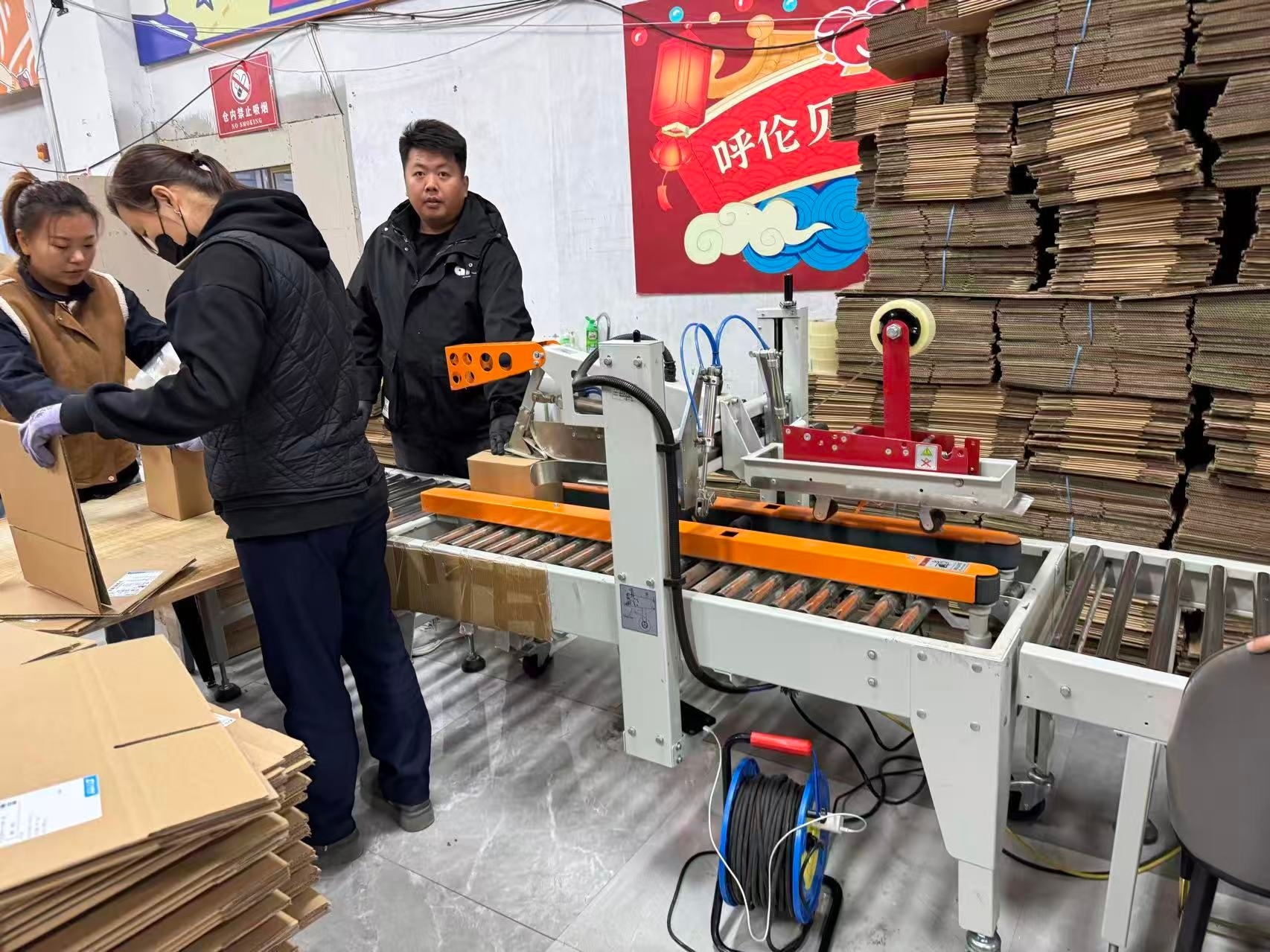
Connecting businesses through e-commerce
Established in late 2023 with an investment of 47 million yuan, the Hulunbuir E-commerce Industrial Park aims to help local enterprises overcome barriers in branding, marketing, logistics and international trade.
Wang said the park had connected with 135 companies and brought together more than 1,200 varieties of products, including beef and mutton, corn, blueberries, sea buckthorn juice and other regional specialties.
The park currently provides warehousing and fulfilment services for 49 businesses, including established enterprises, state-owned companies, small and medium-sized enterprises and young entrepreneurs.
Rather than requiring individual producers to manage every stage of sales, the park helps coordinate product aggregation, online promotion, order processing, delivery and after-sales services. This enables businesses to concentrate on production and product quality while benefiting from shared sales and logistics networks.
The park also operates livestreaming facilities and works with trading partners in Shanghai to connect local products with domestic and international buyers.
Wang cited a corn producer from Molidawa Daur Autonomous Banner as an example of how e-commerce can help smaller businesses grow. With support from the park, the company connected with Chinese livestreaming platform Oriental Selection, where a single livestream generated around 500,000 yuan in sales, according to Wang.
The company subsequently built a factory, created local employment opportunities and obtained import and export qualifications.
Logistics and technology create new opportunities
The e-commerce park has established an airport-linked city cargo station to improve the distribution of regional products. Wang said it could support same-day or next-day delivery to 25 Chinese cities, helping businesses transport products to distant markets more efficiently.
The park is also exploring overseas opportunities for cold beverages and other consumer goods, including markets in Russia, the United States, Iraq and Southeast Asia.
For potential cooperation with Pakistan, the combination of digital sales channels, consolidated logistics and technical knowledge-sharing could help businesses explore opportunities in both directions, Wang stated.
Wang said the park’s broader objective was to help local companies build their own brands and reach more customers rather than relying solely on supplying products for established businesses.
“For Pakistan, cooperation could extend beyond agricultural trade to food processing, product distribution and online retail. For Chinese businesses, importing Pakistani specialties could diversify product offerings and create new commercial links between the two markets”, he added.
As China and Pakistan continue to explore opportunities for economic cooperation, cross-border e-commerce could provide an additional channel for small and medium-sized enterprises to identify partners, test market demand and develop trade in both directions.
(Editor: wangsu )